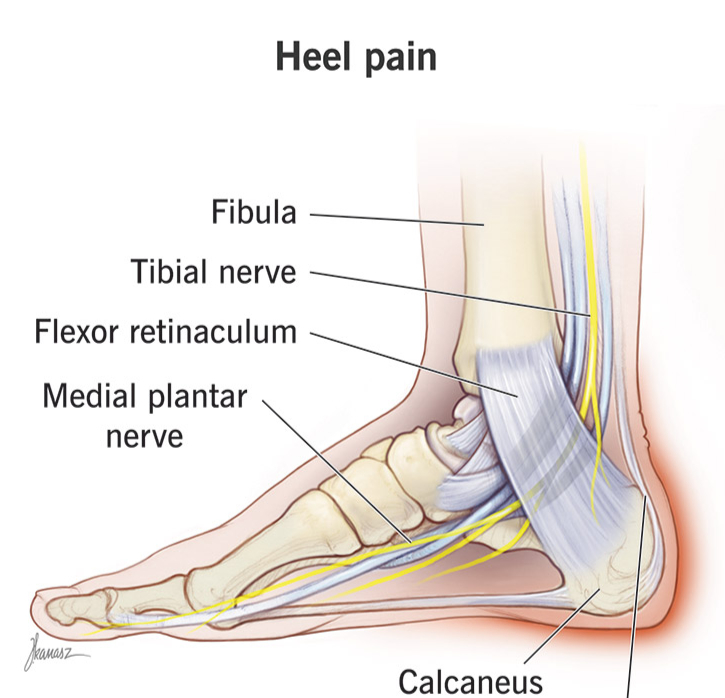
That first step out of bed shouldn’t feel like stepping on a nail. But for millions of people, it does. If mornings have become something you brace for because of a stabbing sensation under your heel, you’re dealing with one of the most frequent complaints physiotherapists see in clinic and one of the most fixable, once you understand what’s driving it.
This guide walks through the real mechanics behind heel pain, why heel pain after running shows up differently than heel pain when walking, and the specific, physio-tested steps that get people back to moving normally. No filler, no guesswork just what actually works.
What’s Happening Inside Your Heel
Your heel isn’t just a lump of bone. It’s a load-bearing structure that takes a beating with every stride anywhere from 1.5 to 3 times your bodyweight lands through it each time your foot hits the ground. Do that a few thousand times a day, and it’s no surprise this small area of the body causes such outsized problems.
A handful of structures are usually responsible when things go wrong:
- Plantar fascia the fibrous band stretching from heel to toes along the sole of the foot
- Achilles tendon linking your calf to the back of the heel bone
- Fat pad the natural shock absorber cushioning the underside of your heel
- Calcaneus (heel bone) which can develop spurs or stress injuries
- Nerves running through the foot and ankle, which can get pinched or irritated
Because several different tissues can produce nearly identical symptoms, guessing at the cause rarely works. Getting an accurate read on which structure is actually inflamed or overloaded is the single biggest factor in how quickly you recover.
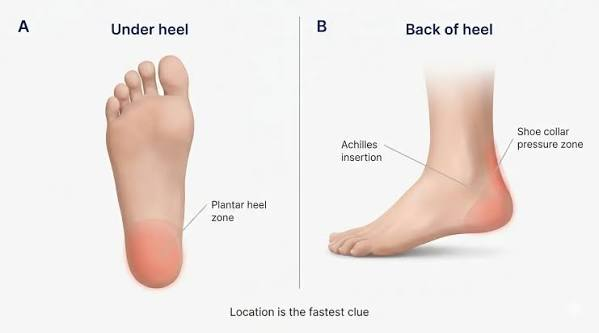
Common Culprits Behind Heel Pain
Plantar Fasciitis
This is the number-one reason people end up in a physio’s office for heel pain. Repeated overload causes tiny tears and irritation in the plantar fascia. The telltale sign is a sharp, stabbing pain concentrated under the heel that’s at its worst during the first few steps after waking up or after sitting for a stretch.
Achilles Tendinopathy
Ramp up your running volume too quickly, add in hill sprints, or increase jump-heavy training, and the Achilles tendon can become overloaded, swollen, and painful right where it meets the back of the heel. This shows up often in runners and field-sport athletes.
Heel Spurs
Years of tension where the plantar fascia attaches to the heel bone can produce a small bony outgrowth. On their own, spurs frequently cause zero symptoms but they’re commonly found sitting alongside an active case of plantar fasciitis.
Fat Pad Damage or Thinning
The cushion under your heel naturally thins as you age, and it can also bruise from a hard landing or from standing on unforgiving surfaces for too long. The result is a deep, bruised feeling rather than the sharp jolt typical of plantar fasciitis.
Pinched Nerves (Tarsal Tunnel or Baxter’s Nerve)
Occasionally the source isn’t a tendon or ligament at all it’s a compressed nerve. Expect burning, tingling, or numbness layered on top of the usual ache in these cases.
Stress Fractures
Runners who spike their mileage too fast, or people with lower bone density, can develop a stress fracture in the heel bone itself. Unlike soft tissue pain, this tends to be a deep, constant ache that doesn’t fully calm down with rest.
Heel Pain After Running: The Runner’s Version of the Problem
Heel pain that shows up specifically around running has its own set of usual suspects. When a physio digs into this pattern, they’re typically looking at:
Doing too much, too soon. Jumping your weekly mileage up sharply, throwing in speed sessions before you’re ready, or tackling hills without building up gradually is a leading trigger. Your plantar fascia and Achilles tendon need time to adapt spike the demand faster than the tissue can keep up, and pain follows.
Switching terrain. Moving from trail to pavement (or the other way around) changes the impact your heel absorbs on every step, and that shift alone can set off symptoms.
Old shoes. Running shoes lose their cushioning long before they look worn out. Pushing past the typical 500–800km lifespan puts extra stress straight through the heel.
Running form. Overstriding, landing hard on the heel, or a slow cadence all increase the force driving through the heel with each footfall.
Tight calves and stiff ankles. When these areas lose mobility, the plantar fascia and Achilles end up compensating and taking on load they weren’t built to handle.
If your pain hits hardest in the first few minutes of a run, fades as you warm up, then comes back afterward — that pattern points strongly toward plantar fasciitis or early Achilles tendinopathy. Both respond well to the right physiotherapy approach.
Heel Pain When Walking: A Different Set of Clues
For people who aren’t runners, heel pain when walking often tells a different story.
Sharp pain with your very first steps in the morning, easing off after a few minutes but returning after any period of rest, is the classic fingerprint of plantar fasciitis.
Pain that builds as the day goes on especially with long stretches of standing or walking on concrete or tile usually points to fat pad irritation or a slower-building case of plantar fasciitis. This is common among retail staff, nurses, teachers, and anyone on their feet all day.
Pain tied to specific footwear, like flats or going barefoot on hard floors, suggests your feet aren’t getting the support they need.
Pain with visible swelling or heat signals a more active inflammatory process and is worth having a physio look at directly.
Matching your symptoms to one of these patterns helps narrow down not just what’s wrong, but which heel pain relief approach will actually move the needle for you.
What Actually Works: Physiotherapy Backed Relief Strategies
Modify Activity Don’t Just Stop Moving
Total rest is usually the wrong call. Tendons and fascia actually need a certain amount of load to repair properly. Instead of stopping everything, a physio will help you dial back high-impact stress while keeping you moving in ways that support healing rather than undermine it.
Ice for Pain Control
Icing the heel for 10 to15 minutes after activity helps dampen pain and swelling, particularly in the early stages. Rolling your foot over a frozen bottle combines cold therapy with a light massage effect — a simple trick that pays off.
Stretch the Right Structures
Targeted stretching is one of the best-supported ways to get heel pain relief, especially for plantar fasciitis:
- Wall calf stretch hold 30 seconds, repeat with both a straight and a bent knee to hit both calf muscles
- Direct plantar fascia stretch sit down and pull your toes back toward your shin
- Towel-assisted stretch loop a towel around the ball of your foot and gently draw it toward you
Doing these first thing in the morning, before your feet even hit the floor, often makes a real dent in that painful first step within a couple of weeks.
Build Strength, Not Just Flexibility
Long-term relief depends on strength, not stretching alone. The exercises that matter most:
- Calf raises (straight-knee and bent-knee versions) to load both major calf muscles
- Toe curls and towel scrunches to strengthen the small muscles inside the foot
- Single-leg balance drills for overall foot and ankle stability
- Eccentric heel drops, particularly valuable when the Achilles is involved
A physio builds this into a gradual, progressive plan too much load too soon can flare things up, while too little slows recovery down.
Fix Your Footwear
Shoes with real arch support and cushioning take pressure off an irritated heel. Many people also benefit from off-the-shelf or custom orthotic insoles that redistribute load away from the sore spot and correct underlying foot mechanics.
Hands-On Treatment
Soft tissue work, myofascial release, and joint mobilization can ease tension in the plantar fascia, boost circulation, and restore more normal movement through the foot and ankle.
Taping
Kinesiology tape or rigid strapping can offload the plantar fascia and provide a noticeable dip in pain useful early on, or as a bridge back to running.
Night Splints
If mornings are your worst time, a night splint that keeps the plantar fascia and calf gently stretched while you sleep stops the tissue from tightening up overnight softening that first painful step considerably.
Shockwave Therapy
For cases that drag on despite doing everything right, extracorporeal shockwave therapy has solid research behind it for stimulating healing and cutting pain in chronic plantar fasciitis and Achilles issues.
What Recovery Typically Looks Like
Every case is different, but a fairly typical physio-guided recovery unfolds like this:
Weeks 1–2: Cut back aggravating activity, apply ice, start gentle stretching, and consider taping or a footwear change.
Weeks 3–6: Add progressive strengthening, keep up the stretching, and slowly increase how much walking or light activity you’re doing.
Weeks 6–12: Rebuild toward running (or other high-impact activity) with a structured loading plan, while continuing strength work.
Beyond 12 weeks: More stubborn or long-standing cases might need extras like shockwave therapy or a closer look at your movement mechanics.
Most people notice a real difference within six to eight weeks of sticking with treatment though chronic plantar fasciitis can take three to six months to fully settle.
When It’s Time to See a Physio
Home strategies handle plenty of mild cases, but book a proper physiotherapy assessment if:
- Pain sticks around past two or three weeks despite basic care
- It’s severe, or getting worse instead of better
- You’re seeing noticeable swelling, redness, or warmth
- There’s numbness, tingling, or a burning sensation
- Daily walking or activity is genuinely being disrupted
- You’re a runner and it’s cutting into your training
A physiotherapist can pin down exactly which structure is causing your pain and build a plan around it — far more reliable than trying to self-diagnose among several possible causes.
Keeping Heel Pain From Coming Back
Once things settle down, staying ahead of a relapse matters just as much as the initial fix:
- Increase mileage or activity gradually the well-known 10% weekly rule is a decent guide
- Replace running shoes every 500 to 800km
- Keep up calf and foot stretches as routine maintenance, even once pain is gone
- Continue foot, ankle, and calf strength work long-term
- Don’t spend hours standing or walking on hard floors without supportive shoes
- Warm up properly before running or any high-impact session
- Act on early warning signs instead of pushing through them
Frequently Asked Questions
What’s the quickest way to get heel pain relief?
A mix of cutting back aggravating activity, icing for 10–15 minutes post-activity, calf and plantar fascia stretches, and supportive footwear or taping brings the fastest relief. That said, quick relief and a full fix aren’t the same thing lasting results come from a structured, physio-guided plan.
Why is my heel pain worse first thing in the morning?
That’s the signature of plantar fasciitis. While you sleep, the plantar fascia tightens up. Your first steps stretch it suddenly, producing that sharp jolt — which usually eases within a few minutes as the tissue loosens.
Can I keep running through heel pain?
It depends on how bad it is. Mild discomfort that fades during the run and doesn’t linger afterward might be manageable with adjusted training. Sharp or worsening pain during a run, though, is your cue to cut back and get assessed before it turns into a longer-term issue.
How long does plantar fasciitis take to heal?
Many people feel noticeably better within four to six weeks of consistent treatment, though a full recovery often takes three to six months — especially if the pain had been building for a while before treatment started.
What kind of shoes actually help with heel pain?
Look for solid arch support, cushioned heels, and good shock absorption. Skip flat, unsupportive shoes and going barefoot on hard floors while you’re recovering — both add unnecessary strain to the plantar fascia.
Can walking too much cause heel pain?
Yes. A sudden jump in how much you’re walking, long hours standing, or too much time on hard flooring without proper shoes can all overload the plantar fascia and trigger pain when walking.
Are orthotics or insoles worth it for heel pain?
Often, yes particularly if you have flat feet, high arches, or spend a lot of time on your feet. A physio can tell you whether basic insoles will do the job or whether you need something custom-made.
Do heel spurs actually cause pain?
Not necessarily. Plenty of people have spurs on an X-ray with zero symptoms. When there is pain, it’s usually the surrounding tissue often the plantar fascia that’s inflamed, not the spur itself.
Which exercises help heel pain the most?
Calf stretches, direct plantar fascia stretches, and progressive strength work like calf raises and eccentric heel drops have the strongest track record for heel pain relief.
When should heel pain actually worry me?
Get it checked if the pain is severe, hangs around past two to three weeks, comes with swelling or numbness, or is stopping you from walking or running normally. These can signal something more complex than straightforward overuse.
The Bottom Line
Whether it flares up mid run or creeps in during a normal day of walking, heel pain isn’t something you have to just live with. Pinning down the actual cause plantar fasciitis, Achilles tendinopathy, a bruised fat pad, or something else entirely is what separates people who bounce back in weeks from people who struggle with it for months.
A plan that combines smart activity modification, the right stretches, progressive strengthening, proper footwear, and hands-on physio treatment gets most people back to pain-free walking and running for good, not just for now.
If heel pain has been slowing you down, don’t wait it out. A physiotherapy assessment can pinpoint what’s actually going on and get you moving toward recovery faster than guessing on your own.