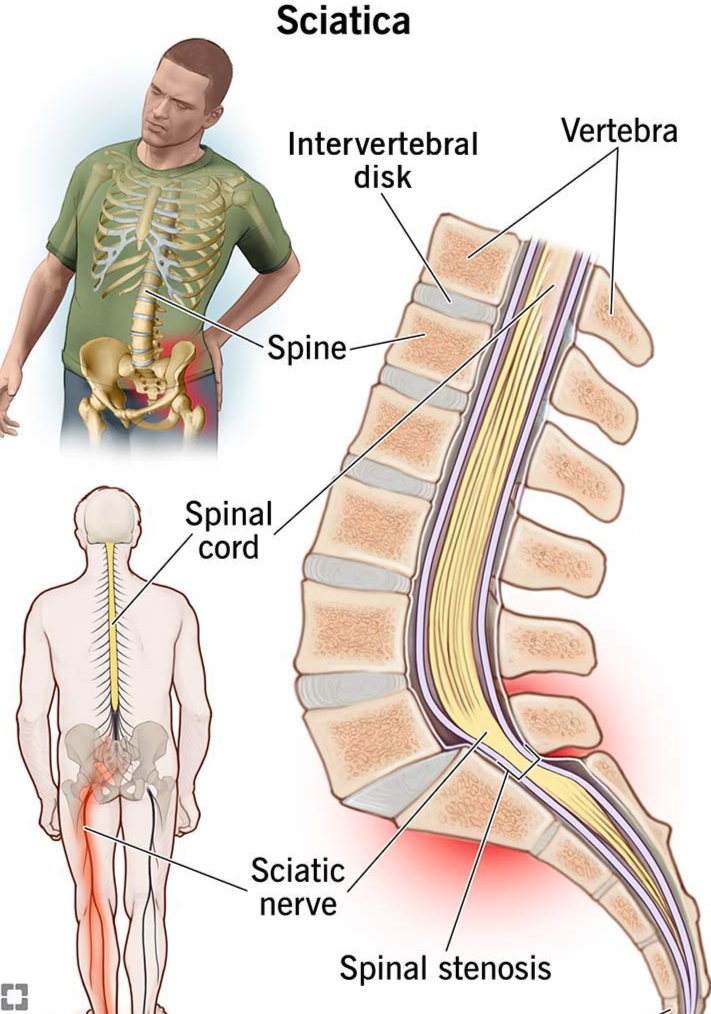
Sciatica can feel like an uninvited guest, sending sharp jolts or dull aches from your lower back down through your legs. While it’s often uncomfortable, most people can find relief without turning to medications. Understanding what triggers sciatica and adopting simple strategies can dramatically reduce discomfort and help regain normal movement.
What Sciatica Really Is
Think of the sciatic nerve as a highway carrying signals between your spine and legs. When something compresses this highway—whether a slipped disc, tight muscle, or spinal narrowing—the signals get “bottle necked,” resulting in pain, tingling, or weakness. Sciatica isn’t a disease in itself but a sign that your body needs attention.
Why Sciatica Happens
Several factors can irritate the sciatic nerve:
- Disc displacement: Spinal discs act as cushions, and when one slips, it can press against the nerve.
- Tight muscles: Muscles in the lower back or buttocks can squeeze the nerve, particularly the piriformis muscle.
- Age-related spinal changes: Gradual wear and tear can pinch nerves.
- Injuries: Accidents or heavy lifting may trigger sudden nerve irritation.
- Lifestyle habits: Long hours sitting, poor posture, or weak core muscles can aggravate symptoms.
How Sciatica Feels
People often describe sciatica in unique ways:
- Shooting sensations that travel from the lower back down one leg
- Pins-and-needles tingling in the leg or foot
- Leg weakness, making climbing stairs or standing for long periods difficult
- Discomfort when sitting, bending, or sneezing
Unlike general back pain, sciatica usually follows a clear path along the sciatic nerve.
Non-Medication Approaches to Relief
You don’t need to rely solely on painkillers. Natural methods can be highly effective:
1. Gentle Movement
Movement is medicine for the sciatic nerve. Gentle exercises can release pressure and improve circulation:
- Hip and hamstring stretches to relieve tightness
- Core stabilization exercises for spine support
- Low-impact cardio like walking or swimming to maintain flexibility
Consistency is more important than intensity; small daily steps add up.
2. Temperature Therapy
Heat and cold can help manage pain naturally:
- Cold compresses: Reduce inflammation during acute pain episodes
- Warmth: Heating pads, warm baths, or heat wraps relax tight muscles and increase blood flow
Alternating heat and cold may provide extra relief.
3. Targeted Massage
Massage can work wonders for tight areas around the lower back and buttocks. Techniques like deep tissue work or focused muscle release help ease tension and reduce nerve irritation.
4. Mind-Body Connection
Stress and pain are closely linked. Mind-body practices can enhance recovery:
- Mindfulness and meditation: Train the brain to manage pain perception
- Yoga or gentle stretching routines: Promote flexibility and reduce tightness
- CBT (Cognitive Behavioral Therapy): Helps manage stress or anxiety linked to chronic pain
5. Alternative Therapies
Some people benefit from complementary approaches:
- Acupuncture: Uses small needles to stimulate nerve pathways
- Electrical nerve stimulation (TENS): Blocks pain signals to the brain
- Chiropractic adjustments: Correct misalignment to reduce nerve compression
6. Everyday Adjustments
Simple changes in posture and routine can prevent flare-ups:
- Sit and stand with proper alignment
- Use supportive chairs or cushions
- Avoid long periods of inactivity
- Wear shoes that support your posture
- Lift objects carefully, bending at the knees
When to Get Professional Help
Most sciatica improves with home strategies, but see a healthcare provider if:
- Pain lasts more than a few weeks
- Numbness or weakness spreads or intensifies
- You experience changes in bladder or bowel control
- Pain is sudden and severe
Prompt care ensures that serious conditions aren’t missed.
FAQs About Sciatica
Q1: Can sciatica go away without treatment?
Yes, mild cases often improve on their own with movement and posture adjustments.
Q2: Is exercising safe if I have sciatica?
Gentle, low-impact activity is safe and recommended, but avoid heavy lifting or sudden twists.
Q3: How long does recovery take?
It depends on the cause. Some feel better in a few weeks; others may need several months of consistent care.
Q4: Are there effective home remedies?
Yes. Stretching, yoga, heat/cold therapy, and mindful movement can help manage symptoms.
Q5: Can sciatica affect both legs?
Usually only one leg is affected, though rare cases involve both.
Q6: Does diet play a role?
Maintaining a healthy weight and eating anti-inflammatory foods can support spinal health.
Q7: When should I see a doctor immediately?
If you experience severe pain, sudden weakness, or loss of bladder/bowel control, seek urgent medical attention.
Conclusion
Sciatica can disrupt daily life, but natural strategies can provide substantial relief. Gentle exercises, stretching, massage, heat and cold therapy, and mindful movement all help reduce pressure on the sciatic nerve. Adopting small daily habits and understanding the underlying causes can prevent flare-ups and improve overall mobility without relying solely on medications.
With patience and consistent care, most people can regain comfort and maintain an active lifestyle.