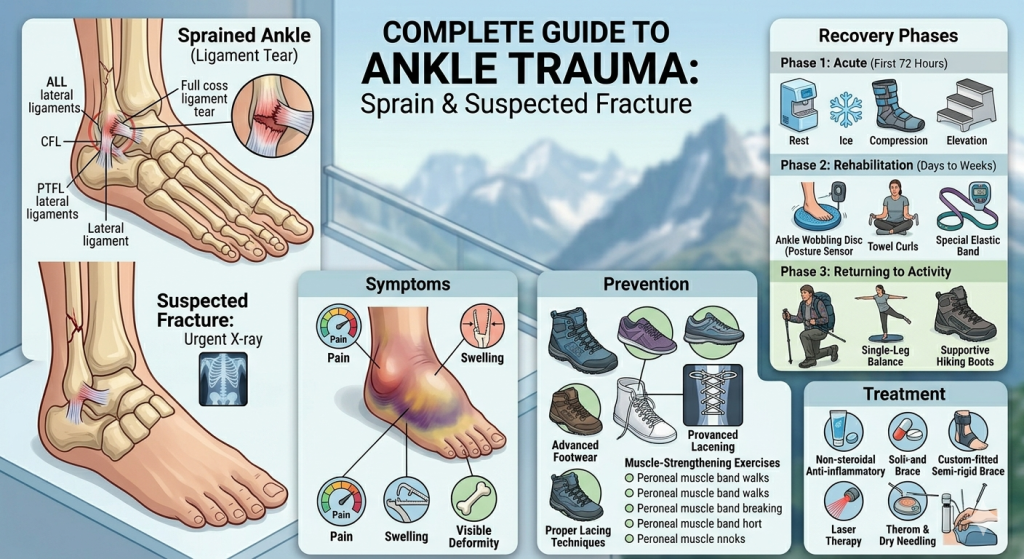
A sprained ankle is a common injury that can happen during sports, exercise, or even while walking on an uneven surface. It occurs when the ankle twists beyond its normal range, causing damage to the ligaments that support the joint. These ligaments help keep the ankle stable and prevent excessive movement.
Many people ignore ankle injuries at first, thinking the pain will disappear on its own. However, without proper care, a sprained ankle can lead to long-term weakness, repeated injuries, and chronic discomfort. Understanding the causes, symptoms, and recovery process is important for proper healing.
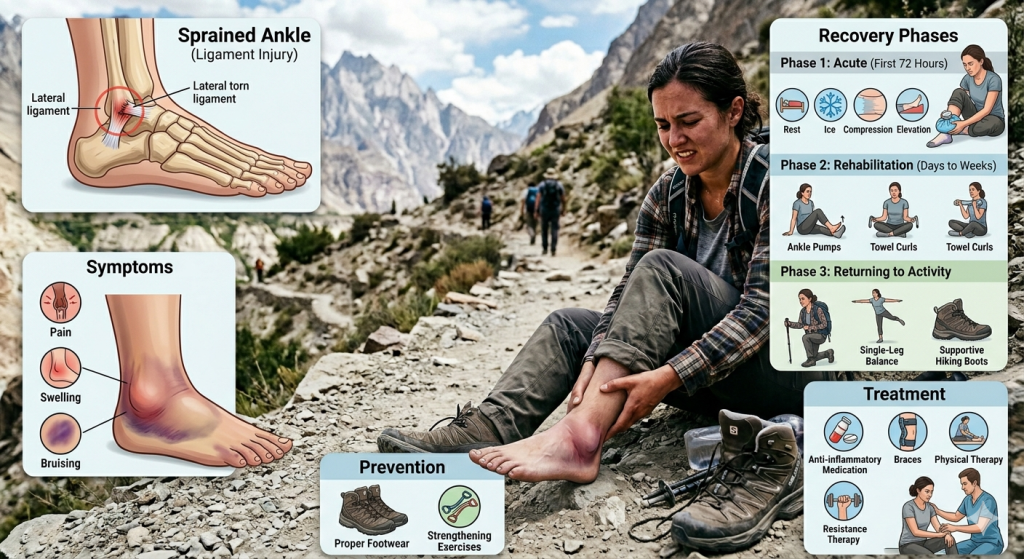
Understanding a Sprained Ankle
The ankle joint connects the foot to the lower leg and relies on strong ligaments for support. When the foot suddenly rolls inward or outward, these ligaments can overstretch or tear.
Most sprained ankles involve the ligaments located on the outer side of the ankle because this area is more vulnerable during twisting movements.
Sprains can range from mild stretching of the ligaments to complete tears that affect walking and balance.
Common Reasons for Ankle Sprains
Ankle sprains can happen in many daily activities and sports situations. Some common causes include:
- Landing incorrectly after jumping
- Sudden changes in direction while running
- Walking on rough or slippery ground
- Wearing unstable footwear
- Weak ankle muscles
- Previous ankle injuries
Athletes who play football, basketball, volleyball, or tennis are especially prone to ankle sprains because these sports involve quick movements and jumping.
Signs and Symptoms of a Sprained Ankle
The symptoms vary depending on the severity of the injury. Common symptoms include:
- Pain around the ankle joint
- Swelling that develops quickly
- Bruising or discoloration
- Difficulty moving the ankle
- Pain while standing or walking
- Tenderness when touching the area
- Feeling like the ankle may give way
- Reduced flexibility
Some people also hear or feel a popping sensation at the moment of injury.
Different Levels of Ankle Sprains
Mild Sprain
A mild sprain involves slight stretching of the ligaments. There may be minimal swelling and discomfort, but walking is usually possible.
Moderate Sprain
This type involves partial tearing of the ligaments. Swelling, bruising, and pain become more noticeable, and movement may be difficult.
Severe Sprain
A severe sprain occurs when the ligament tears completely. The ankle may feel unstable, and standing or walking can become very painful.
How Doctors Diagnose a Sprained Ankle
A healthcare professional examines the ankle to check for pain, swelling, and stability. Questions about how the injury happened also help determine the severity.
If a fracture or major ligament damage is suspected, imaging tests such as X-rays or MRI scans may be recommended.
Best Treatment for a Sprained Ankle
Early treatment is important for reducing swelling and helping the ankle heal correctly.
Rest and Protection
Limiting movement allows the damaged ligaments to recover. Avoid activities that put pressure on the injured ankle.
Cold Therapy
Applying an ice pack for short periods during the first two days can help control swelling and discomfort.
Compression Support
Wrapping the ankle with a compression bandage may provide support and reduce swelling.
Elevation
Keeping the foot elevated above heart level helps improve blood circulation and reduce inflammation.
Pain Relief
Over-the-counter pain medications may help reduce discomfort, but they should be used carefully and according to medical advice.
Physiotherapy for Sprained Ankle Recovery
Physical therapy is often recommended after the initial pain and swelling decrease. Rehabilitation exercises help restore movement, strength, and balance.
Physiotherapy can also lower the risk of future ankle injuries by improving joint stability.
Helpful Exercises for Recovery
Toe Raises
This exercise strengthens the muscles around the ankle and improves balance.
Ankle Rotations
Gentle ankle circles improve flexibility and reduce stiffness.
Resistance Band Exercises
Using resistance bands can help rebuild strength safely.
Single-Leg Balance
Standing on one foot improves coordination and ankle stability.
Exercises should be performed gradually to avoid worsening the injury.
How Long Does Recovery Take?
Healing time depends on the seriousness of the sprain.
- Minor sprains often recover within a few weeks
- Moderate injuries may take over a month
- Severe ligament tears can require several months of recovery
Following a rehabilitation program consistently can improve healing speed.
Warning Signs That Need Medical Attention
Medical evaluation is important if you experience:
- Severe swelling
- Inability to put weight on the foot
- Extreme pain
- Visible deformity
- Persistent symptoms
- Numbness or tingling
These signs may indicate a fracture or serious ligament injury.
Preventing Future Ankle Sprains
Many ankle injuries can be prevented by improving ankle strength and stability.
Wear Supportive Shoes
Shoes with good support reduce the chance of twisting the ankle.
Strengthen the Ankle
Regular exercises help improve muscle control around the joint.
Warm Up Before Physical Activity
Stretching and warming up prepare the muscles and ligaments for movement.
Improve Balance and Coordination
Balance training reduces the risk of falls and awkward movements.
Avoid Returning Too Soon
Returning to sports before complete recovery increases the risk of another sprain.
Possible Complications
Ignoring a sprained ankle or returning to activity too early may lead to:
- Chronic ankle instability
- Repeated sprains
- Persistent swelling
- Ongoing pain
- Joint stiffness
Proper rehabilitation is essential for preventing long-term problems.
Final Thoughts
A sprained ankle is more than a simple twist. Without proper care, it can affect mobility and daily activities for a long time. Early treatment, adequate rest, and rehabilitation exercises play an important role in recovery.
Taking steps to strengthen the ankle and improve balance can help prevent future injuries and keep the joint healthy. If pain or swelling continues, seeking medical advice is the best way to avoid complications.
FAQs About Sprained Ankle
❓ What should I do immediately after a sprained ankle?
Rest the ankle, apply ice, use compression, and keep the foot elevated to reduce swelling.
❓ Is it safe to walk with a sprained ankle?
Walking may worsen the injury if the sprain is severe. Rest is usually recommended during the early recovery stage.
❓ How can I reduce ankle swelling quickly?
Cold therapy, elevation, and compression are commonly used to manage swelling.
❓ Do ankle sprains heal completely?
Most ankle sprains heal well with proper treatment and rehabilitation.
❓ Can exercise help ankle recovery?
Yes, rehabilitation exercises improve strength, flexibility, and stability during recovery.
❓ What happens if a sprained ankle is left untreated?
Untreated ankle sprains can cause chronic pain, instability, and repeated injuries.
❓ When can I return to sports after an ankle sprain?
Return to sports should only happen after pain decreases and ankle strength and balance improve.
❓ Can physiotherapy prevent future ankle injuries?
Yes, physiotherapy strengthens the ankle and improves movement patterns, helping prevent reinjury.