Knee ligament injuries are among the most common musculoskeletal conditions affecting athletes, active adults, and even people performing routine daily activities. A sudden twist, awkward landing, direct impact, or unexpected fall can stretch or tear the strong bands of tissue that stabilize the knee. These injuries often lead to pain, swelling, instability, and difficulty walking.
At Pain Relief Physio, we understand how frustrating knee injuries can be. Whether your goal is to return to sports, resume work comfortably, or simply walk without pain, early diagnosis and personalized physiotherapy play a vital role in recovery.
This comprehensive guide explains everything you need to know about knee ligament injuries, including their causes, symptoms, diagnosis, treatment options, rehabilitation, prevention strategies, and long-term recovery.
What Are Knee Ligaments?
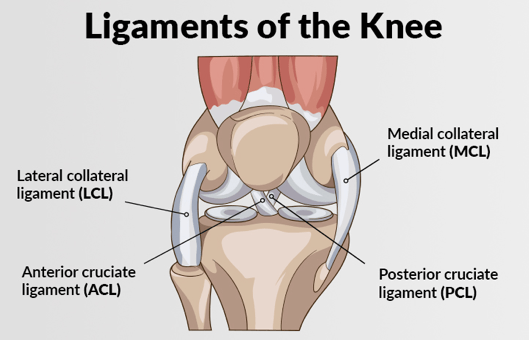
Ligaments are tough, fibrous tissues that connect bones and provide stability to joints. The knee contains four major ligaments that work together to keep the joint stable during movement.
These include:
- Anterior Cruciate Ligament (ACL)
- Posterior Cruciate Ligament (PCL)
- Medial Collateral Ligament (MCL)
- Lateral Collateral Ligament (LCL)
Each ligament has a specific function, helping control forward, backward, and side-to-side movement while preventing excessive twisting.
When one or more of these ligaments become overstretched or torn, it results in a knee ligament injury.
Types of Knee Ligament Injuries
ACL Injury
The ACL is one of the most frequently injured knee ligaments. It commonly occurs during sports involving sudden stops, jumping, pivoting, or rapid direction changes.
Common sports include:
- Football
- Basketball
- Cricket
- Volleyball
- Tennis
- Skiing
Many people report hearing a “pop” at the time of injury followed by immediate swelling.
PCL Injury
The posterior cruciate ligament is thicker and stronger than the ACL. It is often injured during direct impact to the front of the knee, such as in road traffic accidents or falls.
PCL injuries may initially feel less severe but can still cause long-term instability if untreated.
MCL Injury
The medial collateral ligament is located along the inner side of the knee. It is usually injured when the outside of the knee receives a direct blow.
MCL injuries commonly occur in contact sports but can also happen during slips and falls.
LCL Injury
The lateral collateral ligament runs along the outside of the knee. Injuries are less common but often occur alongside other ligament damage.
LCL tears may develop after severe twisting injuries or high-impact trauma.
What Causes Knee Ligament Injuries?
Several situations can lead to ligament damage.
Common causes include:
- Sudden twisting of the knee
- Landing incorrectly after jumping
- Sports collisions
- Road traffic accidents
- Falling awkwardly
- Hyperextending the knee
- Rapid changes in direction
- Weak supporting muscles
- Poor balance
- Previous knee injuries
People who participate in high-impact sports are generally at greater risk, but knee ligament injuries can affect anyone.
Risk Factors
Certain factors increase the likelihood of sustaining knee ligament injuries.
These include:
- Playing competitive sports
- Poor conditioning
- Weak thigh muscles
- Tight hamstrings
- Inadequate warm-up
- Improper footwear
- Uneven playing surfaces
- Previous ligament tears
- Obesity
- Reduced flexibility
Addressing these risk factors through physiotherapy can significantly reduce injury rates.
Symptoms of Knee Ligament Injuries
Symptoms depend on which ligament is injured and the severity of the damage.
Common symptoms include:
- Sudden knee pain
- Swelling within hours
- Difficulty walking
- Feeling of instability
- Knee giving way
- Limited movement
- Bruising
- Tenderness around the joint
- Difficulty climbing stairs
- Inability to bear weight comfortably
Some patients experience only mild discomfort initially, while others cannot continue walking immediately after the injury.
Severity of Knee Ligament Injuries
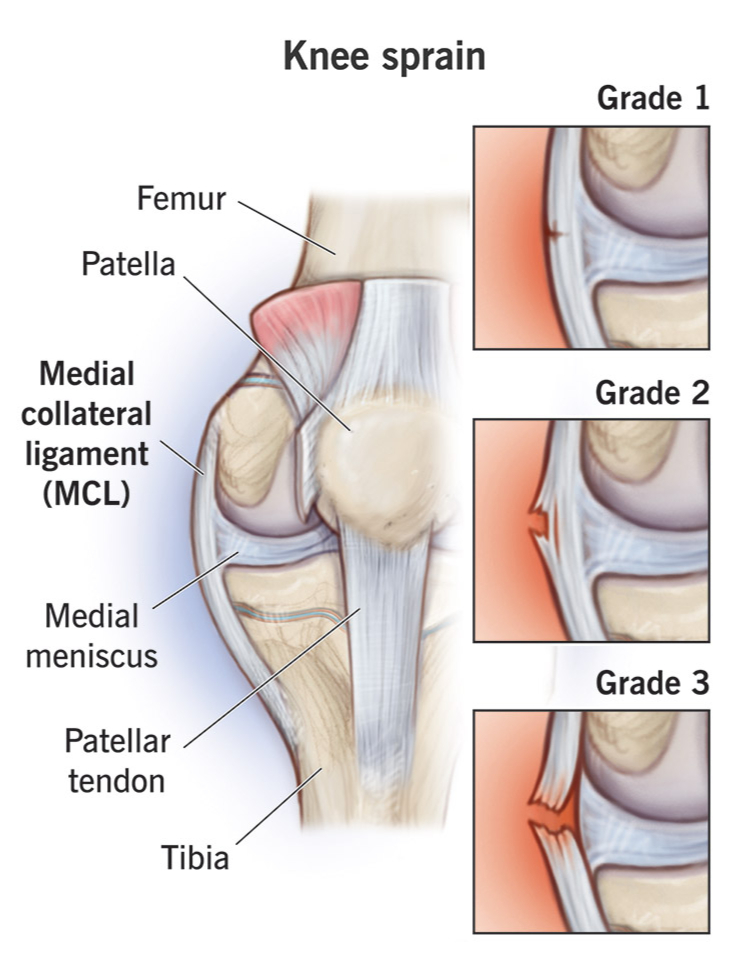
Doctors usually classify ligament injuries into three grades.
Grade I
The ligament is stretched but not torn.
Symptoms include:
- Mild pain
- Minor swelling
- Little instability
Recovery is usually quick.
Grade II
The ligament is partially torn.
Symptoms include:
- Moderate pain
- Swelling
- Reduced stability
- Difficulty walking
Physiotherapy becomes very important during this stage.
Grade III
The ligament is completely torn.
Symptoms often include:
- Severe instability
- Significant swelling
- Difficulty standing
- Loss of normal knee function
Surgical reconstruction may sometimes be recommended depending on the patient’s age, activity level, and goals.
How Knee Ligament Injuries Are Diagnosed
A healthcare professional begins with a detailed history of how the injury occurred.
Next comes a physical examination to evaluate:
- Swelling
- Range of motion
- Tenderness
- Knee stability
- Walking pattern
Several specialized tests help identify the injured ligament.
Imaging studies may include:
- X-rays
- MRI scans
- Ultrasound (in selected cases)
MRI remains the gold standard for assessing ligament injuries because it clearly shows soft tissue damage.
Treatment for Knee Ligament Injuries
Treatment depends on the injured ligament, severity, age, lifestyle, and activity goals.
Most people benefit from a combination of conservative management and physiotherapy.
Immediate First Aid
The first 48 hours are critical.
Doctors commonly recommend the RICE method.
Rest
Avoid activities that increase pain.
Ice
Apply an ice pack for 15–20 minutes several times daily.
Compression
Use an elastic bandage to reduce swelling.
Elevation
Keep the leg raised above heart level whenever possible.
Pain Management
Pain relief may involve:
- Ice therapy
- Compression
- Physician-prescribed medications
- Activity modification
- Gentle movement exercises
Avoid returning to sports too early, as this increases the risk of reinjury.
Why Physiotherapy Is Essential
Physiotherapy forms the foundation of successful recovery from knee ligament injuries.
A customized rehabilitation plan helps:
- Reduce pain
- Control swelling
- Restore flexibility
- Improve muscle strength
- Enhance joint stability
- Improve balance
- Restore walking
- Prevent stiffness
- Reduce future injury risk
At Pain Relief Physio, treatment plans are designed according to each patient’s injury severity and recovery goals rather than using a one-size-fits-all approach.
Exercises Used During Rehabilitation
Recovery progresses through carefully planned stages.
Early rehabilitation may include:
- Heel slides
- Quadriceps activation
- Straight leg raises
- Ankle pumps
As healing progresses, exercises become more advanced.
These may include:
- Mini squats
- Step-ups
- Balance training
- Resistance band exercises
- Stationary cycling
- Functional strengthening
- Sport-specific drills
Every exercise program should be supervised by a qualified physiotherapist to ensure safe progression.
Recovery Timeline for Knee Ligament Injuries
Recovery from knee ligament injuries varies depending on the ligament involved, the severity of the injury, your age, overall health, and how closely you follow your rehabilitation program. While some minor injuries heal within a few weeks, more severe ligament tears may require several months of treatment and physiotherapy.
Here is a general recovery timeline:
Grade I (Mild Sprain)
- Recovery: 2–6 weeks
- Most people return to normal daily activities with proper rest and physiotherapy.
Grade II (Partial Tear)
- Recovery: 6–12 weeks
- A structured rehabilitation program is usually needed to restore strength, flexibility, and knee stability.
Grade III (Complete Tear)
- Recovery: 6–12 months
- Complete tears may require surgery, especially for athletes or people with persistent knee instability. Recovery includes rehabilitation before and after surgery.
Every person’s healing journey is different. Following your physiotherapist’s advice can help you recover safely and reduce the risk of re-injury.
Can Knee Ligament Injuries Heal Without Surgery?
Yes, many knee ligament injuries can heal successfully without surgery. Mild to moderate sprains and some partial tears often respond well to conservative treatment, including:
- Physiotherapy
- Strengthening exercises
- Activity modification
- Knee braces (when appropriate)
- Pain management techniques
- Gradual return to activity
However, surgery may be recommended if:
- The ligament is completely torn.
- Multiple ligaments are injured.
- The knee repeatedly gives way.
- You participate in competitive sports.
- Conservative treatment fails to improve stability.
A physiotherapist and orthopedic specialist will work together to determine the most suitable treatment plan.
Benefits of Physiotherapy for Knee Ligament Injuries
Physiotherapy plays a central role in recovery. Rather than focusing only on pain relief, it addresses the underlying causes of instability and weakness.
A personalized rehabilitation program can help:
- Reduce pain naturally
- Minimize swelling
- Improve knee flexibility
- Restore muscle strength
- Improve balance and coordination
- Enhance joint stability
- Correct movement patterns
- Prevent muscle wasting
- Increase confidence during walking
- Reduce the likelihood of future injuries
At Pain Relief Physio, rehabilitation programs are tailored to each patient’s condition, lifestyle, and recovery goals.
Returning to Sports After a Knee Ligament Injury
Returning to sports too early can increase the risk of another injury. Your physiotherapist will assess your progress before clearing you for sports participation.
Before returning to sports, you should be able to:
- Walk without pain
- Have full knee movement
- Demonstrate normal strength in both legs
- Maintain good balance
- Perform jumping and landing drills safely
- Change direction without discomfort
- Complete sport-specific exercises confidently
Never rush your recovery. A gradual return is the safest approach.
How to Prevent Knee Ligament Injuries
Although not all injuries can be avoided, adopting healthy habits can significantly reduce your risk.
Warm Up Properly
Prepare your muscles with light aerobic activity and dynamic stretching before exercising.
Strengthen Supporting Muscles
Strong quadriceps, hamstrings, glutes, and calf muscles provide better support to the knee joint.
Improve Balance
Balance and coordination exercises help your body react quickly during sudden movements.
Wear Proper Footwear
Choose supportive shoes that are appropriate for your activity and fit correctly.
Practice Good Technique
Learning proper jumping, landing, and pivoting techniques reduces unnecessary stress on the knee.
Increase Activity Gradually
Avoid sudden increases in exercise intensity or duration.
Maintain a Healthy Weight
Excess body weight places additional pressure on the knees during everyday activities.
Listen to Your Body
Do not ignore pain or continue exercising through significant discomfort.
Possible Complications of Untreated Knee Ligament Injuries
Ignoring a ligament injury may lead to long-term problems.
Potential complications include:
- Chronic knee pain
- Recurrent swelling
- Knee instability
- Frequent giving way
- Cartilage damage
- Meniscus injuries
- Reduced mobility
- Muscle weakness
- Early osteoarthritis
- Difficulty participating in sports
Seeking early assessment and treatment greatly improves long-term outcomes.
When Should You Visit a Physiotherapist?
You should seek professional assessment if you experience:
- Severe knee pain after an injury
- A popping sensation during injury
- Significant swelling
- Difficulty walking
- Knee instability
- Inability to fully bend or straighten the knee
- Persistent pain lasting several days
- Repeated episodes of the knee giving way
Prompt diagnosis allows treatment to begin before complications develop.
Why Choose Pain Relief Physio?
At Pain Relief Physio, we believe every patient deserves individualized care. Our evidence-based physiotherapy programs are designed to reduce pain, restore movement, and help you return to the activities you enjoy.
Our treatment approach includes:
- Comprehensive physical assessment
- Personalized rehabilitation plans
- Manual therapy
- Therapeutic exercise programs
- Balance and coordination training
- Functional movement correction
- Sports rehabilitation
- Education for injury prevention
- Home exercise guidance
- Ongoing progress monitoring
Our goal is not only to help you recover from knee ligament injuries but also to improve your long-term knee health.
Conclusion
Knee ligament injuries can affect people of all ages, from athletes to individuals carrying out everyday activities. While these injuries may cause pain, swelling, and instability, timely diagnosis and proper rehabilitation can lead to excellent recovery outcomes.
Physiotherapy remains one of the most effective treatments for restoring strength, flexibility, and confidence after a ligament injury. Whether your injury is mild or severe, following a structured rehabilitation plan can help you return safely to work, sports, and daily life.
If you are experiencing knee pain or suspect a ligament injury, consult the experienced physiotherapists at Pain Relief Physio. Early intervention can make all the difference in achieving a full and lasting recovery.
Frequently Asked Questions (FAQs)
1. What are knee ligament injuries?
Knee ligament injuries occur when one or more of the knee’s ligaments are stretched or torn due to sudden twisting, impact, or excessive force.
2. What are the symptoms of a knee ligament injury?
Common symptoms include knee pain, swelling, instability, stiffness, bruising, difficulty walking, and a popping sound at the time of injury.
3. Can a torn knee ligament heal without surgery?
Yes. Many mild and moderate ligament injuries recover with physiotherapy, rest, and rehabilitation. Complete tears may require surgery depending on the severity and activity level.
4. How long does it take to recover from knee ligament injuries?
Recovery can range from 2 weeks to 12 months, depending on the type and severity of the injury.
5. Which ligament is most commonly injured?
The Anterior Cruciate Ligament (ACL) is the most commonly injured knee ligament, especially in sports involving jumping, pivoting, and sudden direction changes.
6. Is walking good after a knee ligament injury?
Walking may be beneficial during recovery if recommended by your healthcare provider. However, avoid activities that increase pain or instability.
7. What exercises help knee ligament recovery?
Common rehabilitation exercises include straight leg raises, heel slides, mini squats, balance training, resistance exercises, and strengthening programs prescribed by a physiotherapist.
8. When should I see a physiotherapist?
Seek physiotherapy if you have knee pain, swelling, instability, limited movement, or difficulty walking after an injury.
9. Can knee ligament injuries be prevented?
Yes. Proper warm-ups, strengthening exercises, balance training, correct sports techniques, and wearing supportive footwear can significantly reduce injury risk.
10. Why is physiotherapy important after a knee ligament injury?
Physiotherapy helps restore strength, mobility, flexibility, and stability while reducing pain and lowering the risk of future injuries.