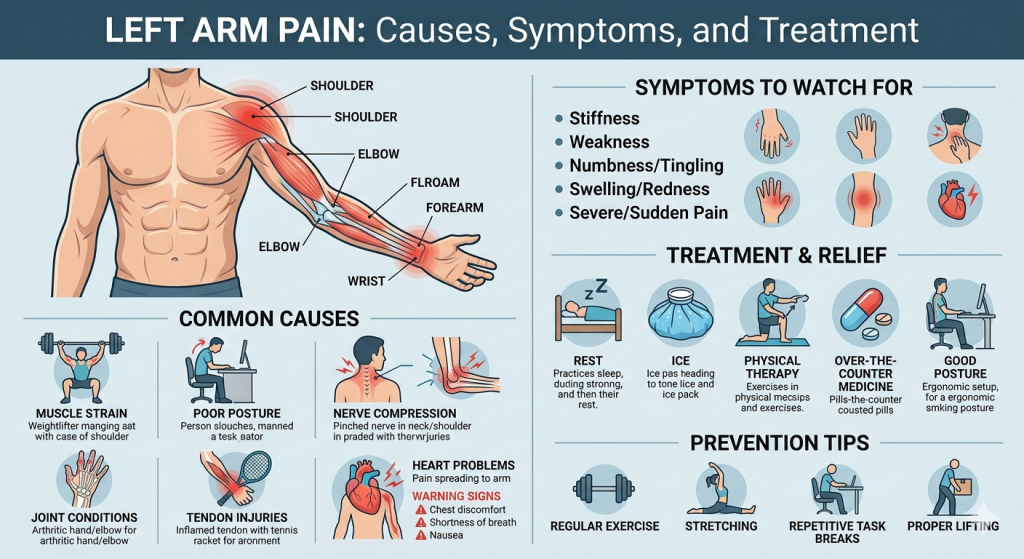
Left arm pain is a common problem that affects millions of people every year. The pain can appear suddenly after an injury or slowly develop over time because of muscle strain, poor posture, nerve problems, or medical conditions. Some people feel mild soreness, while others experience sharp pain, tingling, weakness, or stiffness that interferes with everyday activities. In many cases, left arm pain is harmless and improves with rest, but sometimes it can signal a more serious condition that needs medical attention.
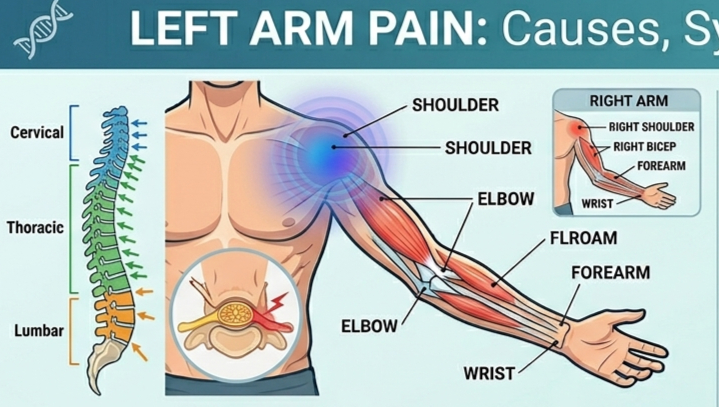
Although left arm pain receives more attention because it may occasionally be linked to heart problems, right arm pain is also very common. Both arms contain muscles, tendons, joints, ligaments, and nerves that can become irritated or injured. Pain may occur in the shoulder, upper arm, elbow, forearm, wrist, or even the fingers. The discomfort may stay in one place or spread through the entire arm depending on the cause.
Common Causes of Arm Pain
One of the leading causes of left arm pain is muscle strain. This usually happens after lifting heavy objects, repetitive movements, exercise, or physical work. When muscles are overused, tiny tears can develop in the tissues, leading to soreness and inflammation. Office workers, athletes, and people who perform repetitive tasks often experience this type of pain.
Poor posture is another major reason behind both left arm pain and right arm pain. Sitting for long hours with rounded shoulders or looking down at a phone constantly places pressure on the neck and shoulders. Over time, this strain affects the nerves and muscles connected to the arms, causing pain and stiffness.
Nerve compression can also lead to severe discomfort. A pinched nerve in the neck or shoulder may send pain down the arm and into the fingers. This type of pain often includes tingling, numbness, weakness, or a burning sensation. Conditions such as cervical disc problems or carpal tunnel syndrome commonly affect the nerves responsible for arm movement and feeling.
Joint conditions like arthritis may also contribute to chronic arm pain. Osteoarthritis develops gradually as joint cartilage wears down with age, while rheumatoid arthritis causes inflammation in the joints. Both conditions may lead to swelling, stiffness, reduced movement, and discomfort in the shoulders, elbows, wrists, or hands.
Tendon injuries are another frequent cause. Tendons connect muscles to bones, and repetitive stress can irritate these tissues. Conditions such as tendonitis, tennis elbow, or rotator cuff injuries often cause pain that worsens during movement. Many people notice discomfort while lifting objects, reaching overhead, or performing daily tasks.
Sometimes left arm pain may be related to heart problems. Pain caused by a heart attack often begins in the chest and spreads to the left shoulder and arm. This pain may feel heavy, tight, or squeezing and can occur along with sweating, nausea, dizziness, or breathing difficulty. Sudden severe left arm pain should never be ignored, especially if it appears with chest discomfort.
Symptoms You Should Not Ignore
The symptoms of arm pain can vary depending on the underlying problem. Some people only feel mild aching, while others struggle with intense pain that affects movement. Common symptoms include stiffness, weakness, swelling, tingling, numbness, burning sensations, or throbbing pain. Some individuals may find it difficult to grip objects or raise the arm normally.
Pain that lasts for several weeks, becomes worse over time, or appears suddenly without explanation should be evaluated by a healthcare professional. Swelling, redness, fever, or visible deformity after an injury may also indicate a serious issue.
Treatment for Left Arm Pain
Treatment depends on the exact cause of the pain. Mild cases caused by overuse or muscle strain often improve with home care. Doctors commonly recommend the RICE method, which includes rest, ice, compression, and elevation. Rest allows injured tissues to heal, while ice helps reduce swelling and inflammation.
Over-the-counter pain relievers may also reduce discomfort. Physical therapy is another effective treatment because it strengthens the muscles, improves flexibility, and restores movement. Stretching exercises for the shoulders, wrists, and arms may help reduce stiffness and improve circulation.
People with posture-related pain should adjust their sitting position and avoid staying in one posture for too long. Ergonomic chairs, proper desk setup, and regular stretching breaks can reduce stress on the arms and shoulders.
In severe cases, medical treatment may include injections, splints, or surgery. Fractures, severe tendon tears, and nerve compression problems sometimes require advanced treatment to prevent long-term damage.
Preventing Arm Pain
Preventing left arm pain and right arm pain often involves simple lifestyle changes. Maintaining good posture is extremely important because it reduces strain on the neck and shoulders. Regular exercise keeps the muscles strong and flexible, while stretching before physical activity lowers the risk of injury.
People who perform repetitive tasks should take regular breaks and avoid overworking the same muscles continuously. Using proper lifting techniques and avoiding excessive strain can also help protect the arms from injury.
Healthy habits such as staying active, maintaining a healthy weight, and managing stress may improve circulation and reduce muscle tension. Small daily changes can make a big difference in preventing long-term arm problems.
Conclusion
Left arm pain can result from many different conditions, including muscle strain, nerve compression, arthritis, tendon injuries, poor posture, or even heart-related problems. Right arm pain may occur for many of the same reasons and can also affect daily life. While mild pain often improves with rest and self-care, severe or sudden symptoms should not be ignored.
Understanding the cause of arm pain is the first step toward proper treatment and recovery. By maintaining good posture, staying physically active, and taking care of the muscles and joints, many people can reduce pain and prevent future injuries.
FAQs
What causes left arm pain without injury?
Left arm pain without injury may be caused by nerve compression, arthritis, poor posture, muscle tension, or heart-related conditions.
Can sleeping position cause arm pain?
Yes, sleeping in an awkward position can place pressure on nerves and muscles, causing pain or numbness in the arm.
Is right arm pain common?
Yes, right arm pain is common and often develops from overuse, repetitive movement, or muscle strain.
When should I worry about left arm pain?
You should seek medical attention if the pain is sudden, severe, or occurs with chest pain, breathing difficulty, dizziness, or sweating.
Can exercise help arm pain?
Gentle stretching and strengthening exercises may help improve flexibility, circulation, and muscle support for the arms.