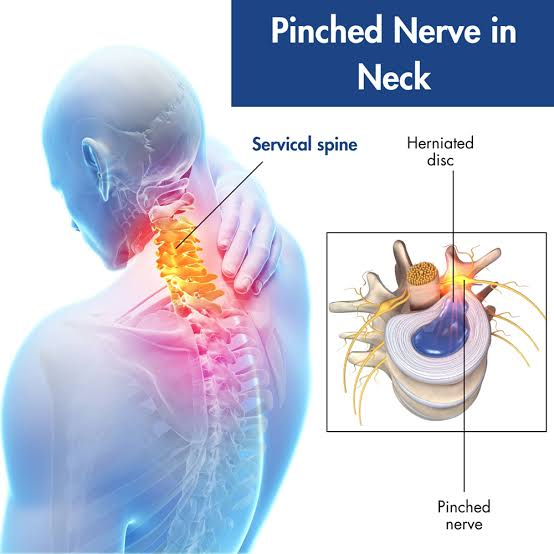
A pinched nerve in the neck happens when surrounding tissue, such as a disc, bone spur, or tight muscle, presses on a nerve root in the cervical spine. Common symptoms include neck pain, arm pain, tingling, numbness, and weakness. Most cases improve within 4 to 12 weeks with physiotherapy, posture correction, and activity changes.
If you woke up with a sharp neck pain that shoots into your shoulder or arm, or your fingers feel like they are buzzing, you may have a pinched nerve in your neck. It is frustrating, it can disturb your sleep, and it makes simple tasks like driving, typing, or lifting a bag feel difficult.
The good news is that most people recover without surgery. This guide explains what a pinched nerve in the neck is, the symptoms to look for, what causes it, how physiotherapy treats it, and when you need urgent medical help.
What Is a Pinched Nerve in the Neck?
A pinched nerve in the neck is a condition where a nerve root leaving the cervical spine is compressed or irritated. Doctors and physiotherapists call it cervical radiculopathy.
Your neck (cervical spine) has seven vertebrae, labelled C1 to C7. Between them sit discs that act as shock absorbers. Nerve roots exit through small openings on each side of the spine. These nerves carry signals to your shoulders, arms, and hands.
When something narrows that opening or presses on the nerve, the nerve becomes irritated and inflamed. The result is pain, altered sensation, or weakness that follows the path of that nerve. This is why a problem in the neck often shows up in the arm or hand.
Pinched Nerve in Neck Symptoms
Pinched nerve in neck symptoms vary from person to person. They depend on which nerve root is affected and how much pressure is present. You may have one symptom or several.
Common symptoms
- Neck pain: A sharp, burning, or deep ache, often on one side.
- Radiating arm pain: Pain that travels from the neck into the shoulder, upper arm, forearm, or hand.
- Tingling or “pins and needles”: Often felt in the fingers or hand.
- Numbness: A reduced or dull feeling in part of the arm or hand.
- Muscle weakness: Difficulty gripping, lifting, or holding objects. You may drop things.
- Pain between the shoulder blades: Commonly reported with lower cervical nerve involvement.
- Stiff neck: Turning or tilting the head becomes painful or limited.
- Headache at the base of the skull: Especially with upper neck problems.
- Pain that worsens with certain movements: Looking up, turning toward the painful side, or coughing and sneezing.
Which nerve is affected? Symptoms by level
The location of your symptoms can hint at which nerve root is involved. This table is a guide only, and a physiotherapist should confirm it through assessment.
| Nerve root | Typical pain and sensation | Possible weakness |
|---|---|---|
| C5 | Neck, shoulder, outer upper arm | Lifting the arm sideways |
| C6 | Neck, outer forearm, thumb and index finger | Bending the elbow, wrist extension |
| C7 | Back of arm, middle finger | Straightening the elbow, hand grip |
| C8 | Inner forearm, ring and little finger | Fine finger movements, grip |
C6 and C7 are the most commonly affected levels, since the lower neck handles the greatest load and movement.
A useful self-check: the shoulder abduction relief sign
Some people with cervical radiculopathy find their arm pain eases when they rest their hand on top of their head. This position reduces tension on the nerve root. It is not a diagnosis, but it is a clue that the neck may be the source of your arm symptoms.
Red flag symptoms: get urgent medical help
Seek emergency care immediately if you notice any of these:
- Weakness or numbness in both arms or both legs
- Loss of bladder or bowel control
- Difficulty walking, balance problems, or clumsy hands
- Severe neck pain after a fall, car accident, or injury
- Fever, unexplained weight loss, or a history of cancer alongside neck pain
- Sudden, severe headache with neck stiffness
These may signal spinal cord compression or another serious condition that cannot wait.
What Causes a Pinched Nerve in the Neck?
A pinched nerve rarely has one single cause. It usually develops from a combination of wear, posture, and strain.
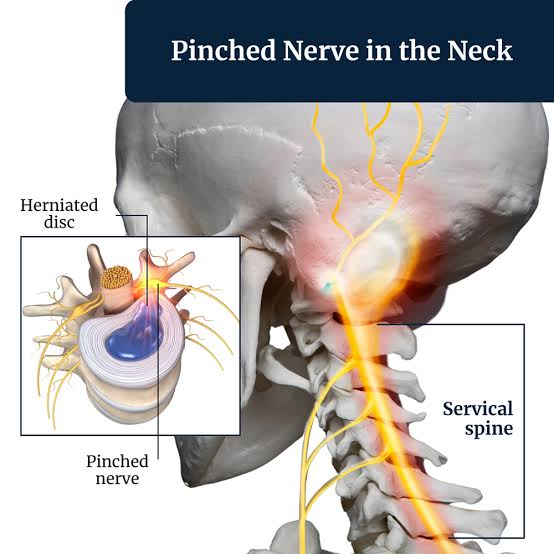
1. Cervical disc herniation
A disc can bulge or rupture and push against a nerve root. This is more common in adults between 30 and 50 and often follows lifting, twisting, or sudden movement.
2. Cervical spondylosis (age-related wear)
With age, discs lose height and moisture, and the body forms bone spurs (osteophytes). These spurs can narrow the nerve openings. This is the leading cause of a pinched nerve in the neck in people over 50.
3. Foraminal stenosis
The exit tunnels for the nerve roots (foramina) narrow because of arthritis, spurs, or disc collapse, leaving less room for the nerve.
4. Poor posture and “tech neck”
Hours spent looking down at a phone or laptop place heavy strain on the neck. For every inch your head moves forward of your shoulders, the load on your neck increases significantly. Over time, this forward head posture can accelerate disc wear and muscle tightness.
5. Muscle tension and spasm
Tight muscles in the neck and upper back can compress and irritate nerves, or they can make an existing nerve problem feel worse.
6. Injury or trauma
Whiplash, sports injuries, and falls can cause sudden disc injury or joint irritation that pinches a nerve.
7. Repetitive movements and sustained positions
Overhead work, cradling a phone between ear and shoulder, long-distance driving, and poor desk ergonomics all contribute.
8. Poor sleeping position
Sleeping with your neck bent or twisted, or with a pillow that is too high or too flat, can trigger symptoms overnight.
Risk factors
You are more likely to develop a pinched nerve in the neck if you:
- Are over 40
- Work at a desk or computer for long hours
- Do repetitive overhead or heavy lifting work
- Have had previous neck injuries
- Smoke (linked to faster disc degeneration)
- Have a family history of spinal problems
- Are inactive or have weak neck and upper back muscles
How Is a Pinched Nerve in the Neck Diagnosed?
Diagnosis starts with a clinical assessment. A physiotherapist or doctor will usually:
- Ask about your history: When symptoms began, what makes them better or worse, and whether there was an injury.
- Check your movement: How far you can turn, bend, and extend your neck, and which movements reproduce your symptoms.
- Test nerve function: Reflexes, muscle strength, and skin sensation in the arms and hands.
- Perform special tests: Such as the Spurling’s test and the upper limb tension test, which help identify nerve root irritation.
- Recommend imaging if needed: X-ray, MRI, or nerve conduction studies are considered when symptoms are severe, not improving, or when red flags are present.
Many people do not need a scan straight away. Guidelines generally suggest imaging when there is progressive weakness, no improvement after several weeks of treatment, or suspicion of a serious cause. Also, scan findings such as disc bulges are common in people with no pain at all, so the results must always be matched to your symptoms and examination.
Pinched Nerve in Neck Treatment: How Physiotherapy Helps
For most people, conservative treatment is the first and most effective approach, and physiotherapy is central to it. The aim is to reduce pressure on the nerve, calm pain, restore movement, and rebuild strength so the problem does not return.
1. Detailed assessment and personalised plan
Every pinched nerve is different. Your physiotherapist identifies the source of the problem, the level affected, and the contributing factors such as posture, work habits, or joint stiffness. Your plan is then built around you rather than a generic sheet of exercises.
2. Manual therapy
Hands-on techniques can reduce pain and improve movement. These may include:
- Gentle joint mobilisation of the neck and upper back
- Soft tissue release for tight muscles
- Neural mobilisation (“nerve gliding”) to help the nerve move more freely
3. Cervical traction
Traction gently creates space between the vertebrae. For some people with radiating arm pain, it offers short-term relief. Your physiotherapist will decide whether it suits your case.
4. Targeted exercise therapy
Exercise is one of the strongest tools for both recovery and prevention. Programmes typically progress from gentle mobility work to strengthening of the deep neck flexors, shoulder blade muscles, and upper back.
5. Posture and ergonomic correction
Small changes make a large difference. Your physiotherapist will review your workstation, driving position, sleeping posture, and daily habits.
6. Pain-relief modalities
Heat, ice, or electrotherapy can be used alongside active treatment to ease pain and muscle spasm.
7. Education and self-management
Knowing what is happening, what is safe, and how to manage flare-ups reduces fear and speeds recovery. Research consistently shows that understanding your condition helps outcomes.
Home Care for a Pinched Nerve in the Neck
While you are being treated, these steps can help manage symptoms.
Stay gently active. Complete rest is not helpful. Short, frequent movements keep the neck from stiffening.
Use heat or ice. Try a warm pack for 15 to 20 minutes to relax tight muscles. Some people prefer ice in the first few days when pain is sharp. Use whichever feels better, and protect your skin with a cloth.
Change positions often. Avoid staying in one posture, especially looking down, for more than 30 minutes.
Support your neck when sleeping. Sleep on your back or side with a pillow that keeps your neck in line with your spine. Avoid sleeping on your stomach.
Find your position of relief. If resting your hand on your head or supporting your arm on a pillow eases symptoms, use it when needed.
Consider over-the-counter pain relief. Some people use anti-inflammatory or pain medication. Check with a pharmacist or doctor first, as it is not suitable for everyone.
Simple neck exercises to try
Perform these gently. Stop if your arm symptoms get worse or spread further down the arm.
- Chin tucks: Sit tall. Gently draw your chin straight back, as if making a double chin. Hold for 5 seconds. Repeat 10 times.
- Shoulder blade squeezes: Pull your shoulder blades back and down. Hold for 5 seconds. Repeat 10 times.
- Gentle neck rotation: Slowly turn your head to each side within a comfortable range. Repeat 5 to 10 times per side.
- Upper trapezius stretch: Tilt your ear toward your shoulder without lifting the shoulder. Hold for 20 to 30 seconds. Do this only if it does not increase arm symptoms.
A useful rule: symptoms moving closer to the neck (centralising) are a good sign. Symptoms spreading further down the arm are a signal to stop and get assessed.
What to Avoid With a Pinched Nerve in the Neck
- Forceful neck cracking or aggressive manipulation. This can worsen nerve irritation, particularly without a proper assessment.
- Prolonged looking down at your phone or laptop.
- Heavy lifting and overhead activity during a flare-up.
- Sleeping on your stomach or with several stacked pillows.
- Ignoring worsening weakness or numbness. Progressive symptoms need prompt evaluation.
- Total bed rest. Inactivity can slow recovery.
How Long Does a Pinched Nerve in the Neck Take to Heal?
Recovery time depends on the cause and severity, but here is a general picture:
- Mild cases: Often improve within a few days to 4 weeks.
- Moderate cases: Commonly resolve within 6 to 12 weeks with consistent treatment.
- Severe or long-standing cases: May take several months, and some need further medical management.
Studies show that the majority of people with cervical radiculopathy improve without surgery. Sticking with your exercise programme and correcting the contributing habits are the biggest factors in a full and lasting recovery.
When Is Surgery or Injection Needed?
Only a small percentage of people need more than conservative care. Your doctor may discuss other options if you have:
- Severe, unrelenting arm pain that does not respond to treatment
- Progressive muscle weakness
- Signs of spinal cord compression
- No meaningful improvement after 6 to 12 weeks of proper conservative care
Options include corticosteroid injections to reduce nerve inflammation and, in selected cases, surgical procedures to relieve pressure on the nerve. Physiotherapy is often still valuable afterwards to restore strength and movement.
How to Prevent a Pinched Nerve in the Neck
Prevention is mostly about protecting your neck from daily strain:
- Set up your workstation properly. Keep your screen at eye level, elbows at about 90 degrees, and feet flat on the floor.
- Raise your phone to eye level instead of dropping your head to it.
- Take movement breaks every 30 minutes. Stand, stretch, and roll your shoulders.
- Strengthen your neck and upper back at least two to three times a week.
- Keep your shoulders mobile with regular stretching.
- Choose a supportive pillow that suits your sleeping position.
- Stay active with walking, swimming, or general fitness.
- Manage stress, since tension often collects in the neck and shoulders.
- Avoid smoking, which is linked to disc degeneration.
Why See a Physiotherapist for a Pinched Nerve in Your Neck?
Neck and nerve pain can look similar on the surface but have very different causes. Guessing at treatment can lead to weeks of unnecessary pain. A physiotherapist can:
- Identify exactly what is compressing or irritating the nerve
- Rule out red flags and refer you on if needed
- Give you hands-on relief and a clear exercise plan
- Teach you how to protect your neck for the long term
At PainRelief Physio, our approach focuses on treating the cause, not just the pain, so you can return to work, sport, and everyday life with confidence.
Frequently Asked Questions (FAQs)
What are the main symptoms of a pinched nerve in the neck?
The main pinched nerve in neck symptoms are neck pain, pain radiating into the shoulder or arm, tingling or numbness in the hand or fingers, and muscle weakness. Symptoms usually affect one side and may worsen with certain neck movements.
How do I know if my neck pain is a pinched nerve or just a muscle strain?
A muscle strain usually causes local pain and stiffness that stays in the neck and shoulder. A pinched nerve typically causes arm pain, tingling, numbness, or weakness that follows a nerve path. If you have symptoms below the shoulder, get assessed.
How long does a pinched nerve in the neck last?
Many cases settle within 4 to 12 weeks with proper care. Mild cases can improve in days, while severe or long-standing cases can take several months.
Can a pinched nerve in the neck go away on its own?
Yes, many mild cases improve on their own as inflammation settles. However, physiotherapy speeds up recovery, reduces the chance of recurrence, and addresses the underlying cause.
What is the fastest way to relieve a pinched nerve in the neck?
There is no instant fix, but relief often comes from gentle movement, heat or ice, avoiding aggravating positions, correcting posture, and physiotherapy treatment such as manual therapy and targeted exercises.
What is the best sleeping position for a pinched nerve in the neck?
Sleeping on your back or side with a pillow that keeps your head level with your spine is best. Avoid stomach sleeping, and avoid pillows that are too high or too flat.
Is heat or ice better for a pinched nerve in the neck?
Either can help. Heat relaxes tight muscles, while ice may ease sharp pain and inflammation. Use whichever feels better for 15 to 20 minutes at a time.
Should I see a doctor or a physiotherapist for a pinched nerve?
A physiotherapist is a good first step for most cases, as they can assess, treat, and refer on when needed. See a doctor urgently if you have red flags such as weakness in both limbs, loss of bladder or bowel control, or symptoms following major trauma.
Can stress cause a pinched nerve in the neck?
Stress does not directly pinch a nerve, but it increases muscle tension in the neck and shoulders, which can aggravate symptoms and slow recovery.
Do I need an MRI for a pinched nerve in the neck?
Not always. Most people are diagnosed through clinical examination. An MRI is usually recommended when symptoms are severe, progressive, or not improving after several weeks, or when red flags are present.
Final Thoughts
A pinched nerve in the neck can be painful and worrying, but it is very treatable. Recognising pinched nerve in neck symptoms early, avoiding aggravating habits, and starting the right physiotherapy plan gives you the best chance of a fast, lasting recovery. Do not ignore ongoing tingling, numbness, or weakness, because early care protects the nerve and prevents small problems becoming long-term ones.